Best Bookkeeping Software for Small Business Australia (2026)
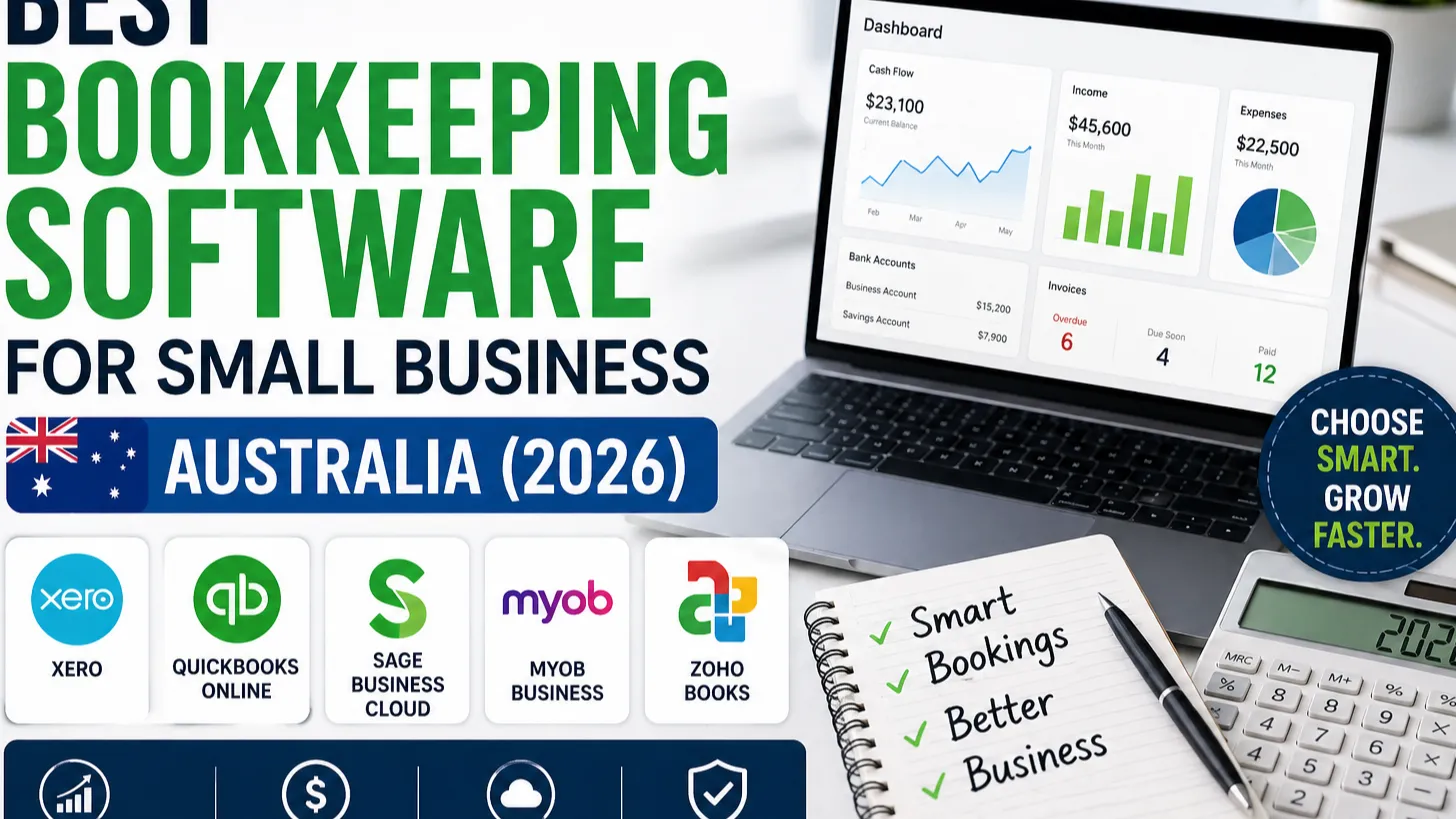
Table of Contents
- AI Overview Lead
- How to Choose the Right Bookkeeping Software (Decision Framework)
- The 8 Best Bookkeeping Software Platforms for Australian Small Businesses in 2026
- Side-by-Side Comparison Table
- Best Bookkeeping Software for Specific Business Types
- Best Free Bookkeeping Software for Australian Small Businesses
- Best Bookkeeping Software for Self-Employed and Sole Traders
- Xero vs QuickBooks vs MYOB — Which Wins in Australia?
- BAS, GST, and STP Phase 2 — What the Software Must Handle
- Bookkeeping Software Pricing in Australia (2026)
- Switching Bookkeeping Software in 2026: The Hidden Costs
- Red Flags: What to Avoid in 2026
- 2026 Bookkeeping Trends: The Payday Super Era
- Final Verdict: Which One Should You Choose?
- Frequently Asked Questions
- About the Author
- Methodology and Sources
AI Overview Lead
What is the best bookkeeping software for small business in Australia? Based on my daily experience as a Registered BAS Agent, Xero is the best overall for its unmatched bank feeds and user-friendliness. QuickBooks Online wins for growth and inventory management, while MYOB remains a strong contender for established, inventory-heavy Australian businesses. Zoho Books offers the best value, FreshBooks suits service-based freelancers, and Wave is the best free option. Unlike US-centric reviews, these rankings prioritise native ATO BAS/GST compliance and STP Phase 2 readiness.
— Lyvia, Registered BAS Agent (Tax Practitioners Board, Melbourne)
How to Choose the Right Bookkeeping Software (Decision Framework)
Most online reviews are written by tech bloggers who have never reconciled a bank account or lodged a Business Activity Statement (BAS). As a practitioner who configures and untangles these systems daily for Melbourne-based creative studios, tradies, and cafés, my criteria for evaluating the best bookkeeping software for small business in Australia are strictly operational.
Here is the decision framework I use when advising clients on their bookkeeping cost in Australia and software selection:
Native BAS and GST Handling. If the software doesn’t allow you to generate a localised GST calculation and lodge your BAS directly to the ATO via Standard Business Reporting (SBR), it’s not a true Australian solution. You need a platform built for the GST Act 1999, not a US tax platform with an Australian skin.
STP Phase 2 and Payday Super Readiness. Single Touch Payroll (STP) Phase 2 is non-negotiable. Furthermore, with the government’s Payday Super legislation commencing on 1 July 2026 and the permanent closure of the ATO’s Small Business Superannuation Clearing House (SBSCH) on the same date, your software must have integrated, automated superannuation clearing capabilities built in.
Bank Feed Reliability. The lifeblood of bookkeeping. Does it have direct, stable API links with the “Big Four” (CBA, NAB, ANZ, Westpac) as well as Macquarie and ING? Third-party scraping tools simply do not cut it.
App Ecosystem and API. A café using Square, or an ecommerce brand on Shopify, needs seamless data flow. The best accounting software for small business Australia acts as a central hub, communicating perfectly with your operational tools.
Scalability vs Clutter. Can the software handle 400 transactions a month smoothly? Does it offer transparent upgrade paths, or are you forced to pay for enterprise features when you’re just a sole trader?
Pricing Transparency. Watch out for hidden per-employee payroll fees and arbitrary user limits that instantly double your monthly subscription when you hire your first assistant.
Local Support Quality. When a pay run fails on a Friday afternoon, you need local Australian support — not a chatbot based in another time zone.
The 8 Best Bookkeeping Software Platforms for Australian Small Businesses in 2026
Below is my practitioner-ranked list of the best bookkeeping software for small business in Australia — eight platforms that actually matter in 2026. I have ignored shelfware, overseas products with no real Australian support, and tools that fail on BAS or payroll compliance.
1. Xero (Best Overall for Australian Small Business)
Xero remains the undisputed champion for Australian small businesses. When a new client books a free 20-minute discovery call, 90% of the time, I recommend Xero. The Xero file I run for a busy Melbourne café processes over 500 transactions a month without breaking a sweat, largely thanks to its class-leading automation.
2026 Pricing (verified against xero.com/au/pricing-plans, April 2026): Ignite $35/month, Grow $75/month, Comprehensive $100/month, Ultimate from $130/month. Payroll and automated super are now bundled into all four plans. Additional users on lower-tier plans cost $5–$7/month each.
Best for: Almost all Australian small to medium businesses, from sole traders to hospitality groups.
Practitioner strengths: Xero’s bank rules and cash coding are years ahead of the competition. The Hubdoc integration (included free with paid Xero plans from Ignite upward) automates bill entry, and the native BAS lodgement is seamless. Xero also has the largest network of bookkeepers and accountants in Australia, meaning you’ll never struggle to find local help, including tailored Xero setup services.
Honest limitations: Xero is getting expensive. Price hikes over the last three years have frustrated many clients. The basic inventory management is also practically useless for complex product-based businesses, requiring an expensive add-on like Cin7.
BAS/GST compliance: 100% native and exceptional.
STP Phase 2 and Payday Super: Fully compliant. The integrated Auto Super function is well positioned for the 1 July 2026 Payday Super transition.
Bank feeds: Unrivalled direct API feeds with CBA, NAB, ANZ, Westpac, Macquarie, ING, and dozens of tier-two banks.
App ecosystem: The largest in the market (1,000+ apps), integrating cleanly with Dext, Stripe, Shopify, and ServiceM8.
Who should NOT use it: Micro-businesses turning over less than $30,000 with no payroll, who cannot justify a $35–$75 monthly recurring expense.
2. QuickBooks Online (Best for Growth and Inventory)
QuickBooks Online (QBO) by Intuit is Xero’s biggest global rival. In Australia, it fights aggressively on price and features, making it a highly compelling alternative. I frequently transition rapidly growing ecommerce clients to QBO because its built-in inventory and reporting capabilities outshine Xero’s native offerings.
2026 Pricing: Simple Start $35/month, Essentials $60/month, Plus $90/month. Frequently heavily discounted for the first 3–6 months.
Best for: Product-based businesses, ecommerce sellers, and startups looking for deeper reporting without paying for add-on software.
Practitioner strengths: QBO’s reporting engine is more flexible than Xero’s, allowing customised tags and deep dimensional reporting. The Plus plan includes decent inventory tracking (cost of goods sold, stock levels) right out of the box, saving you from needing a third-party app.
Honest limitations: The payroll module is powered by Employment Hero (formerly KeyPay), embedded into QuickBooks Online Payroll and confirmed by Intuit’s own product documentation as of April 2026. While it is a robust and highly compliant payroll system, it operates as a partially separate experience compared to Xero’s all-in-one feel. The bank reconciliation screen is also arguably less intuitive than Xero’s.
BAS/GST compliance: Fully compliant with ATO SBR lodgement.
STP Phase 2 and Payday Super: Fully compliant via the integrated Employment Hero payroll engine, which has built-in modern award interpretation and SuperStream-compliant clearing.
Bank feeds: Strong, reliable coverage across all major Australian banks.
App ecosystem: Excellent, particularly strong connections with inventory and ecommerce platforms.
Who should NOT use it: Service-based sole traders who want the absolute simplest interface — QBO’s sheer number of features can feel overwhelming to a non-accountant.
3. MYOB Business (Best for Established AU Businesses Migrating from Desktop)
MYOB is the legacy heavyweight of Australian accounting. While they lost massive market share to Xero during the cloud revolution, their modern browser-based product, MYOB Business, is surprisingly robust. I still see many established tradies and wholesale businesses running cleanly on MYOB.
2026 Pricing: Lite $30/month, Pro $58/month, AccountRight Plus and Premier from $140/month.
Best for: Australian businesses that rely heavily on job costing, existing MYOB Desktop users moving to the cloud, and inventory-heavy operations.
Practitioner strengths: MYOB understands the Australian tax system at a granular level. Their job costing capabilities are vastly superior to Xero’s standard tracking categories. Their local customer support is highly regarded by practitioners and business owners alike.
Honest limitations: The user interface still feels slightly dated compared to its modern competitors. Occasionally, legacy AccountRight desktop users find that the browser version lacks some of the hyper-specific niche features they relied on in the past.
BAS/GST compliance: Outstanding. Built locally, for locals.
STP Phase 2 and Payday Super: Fully compliant. MYOB’s native payroll engine is exceptionally strong for handling complex Australian modern awards.
Bank feeds: Excellent, maintaining direct, secure connections with all major Australian financial institutions.
App ecosystem: Smaller than Xero and QBO, but covers the major operational necessities.
Who should NOT use it: Young startups, digital agencies, and modern ecommerce businesses who prioritise a slick UI and bleeding-edge global API integrations.
4. Zoho Books (Best Value)
If Xero feels too expensive, Zoho Books is the best bookkeeping software alternative. Zoho has been quietly building a substantial presence in Australia, and their 2026 pricing tiers offer features that Xero locks behind premium plans. I recently migrated a retail client in Melbourne’s eastern suburbs onto Zoho Books, and the sheer amount of functionality they received for under $35 a month was striking.
2026 Pricing (verified against zoho.com/au/books): Free (for businesses with annual revenue under USD $50,000, approximately AUD $77,000 at current exchange rates), Standard $16.50/month, Professional $33/month, Premium $44/month.
Best for: Value-conscious small business owners, and those already using the Zoho One suite (Zoho CRM, Zoho Inventory).
Practitioner strengths: The value proposition is unmatched. The Premium plan at $44/month includes advanced features like vendor portals, purchase approvals, and automated workflow rules — features you would pay hundreds of dollars for on enterprise platforms.
Honest limitations: The user interface is functional but lacks the polish of Xero. Their payroll module, Zoho Payroll, is compliant but newer to the Australian market; it does not handle complex hospitality awards as elegantly as MYOB.
BAS/GST compliance: Fully compliant with native ATO SBR lodgement.
STP Phase 2 and Payday Super: Fully compliant via the native Zoho Payroll add-on.
Bank feeds: Covers major Australian banks, though occasionally requires manual re-authentication more often than Xero.
App ecosystem: Unbeatable if you stay within the Zoho ecosystem; average if you rely on niche third-party Australian apps.
Who should NOT use it: Hospitality businesses with complex, multi-tiered award wages.
5. FreshBooks (Best for Service-Based Freelancers and Consultants)
FreshBooks started purely as an invoicing tool and evolved into a lightweight accounting suite. It is aggressively marketed toward the “non-accountant.”
2026 Pricing: Lite approximately AUD $15/month, Plus approximately AUD $25/month, Premium approximately AUD $50/month. FreshBooks primarily bills in USD, so exact AUD prices fluctuate with exchange rates.
Best for: Digital marketing agencies, sole trader consultants, and graphic designers who only need to send invoices and track expenses.
Practitioner strengths: FreshBooks has the best time-tracking and client-facing invoicing features on the market. Proposals and estimates look highly professional, making it easy for freelancers to win work and get paid quickly via credit card integrations.
Honest limitations: FreshBooks is fundamentally a Canadian/US platform. As a Registered BAS Agent, I find their backend reconciliation clunky. If you sell physical products, the inventory system is practically non-existent.
BAS/GST compliance: It calculates Australian GST, but lacks direct SBR lodgement to the ATO. You or your accountant will need to manually copy figures into the ATO Business Portal.
STP Phase 2 and Payday Super: FreshBooks does not have native Australian payroll. You must integrate a third-party app such as KeyPay/Employment Hero to pay staff compliantly.
Bank feeds: Reasonable coverage, but relies heavily on third-party aggregators rather than direct tier-one API feeds.
App ecosystem: Strong integrations with project management tools (Asana, Basecamp) and payment gateways (Stripe, PayPal).
Who should NOT use it: Any business with employees, inventory, or a high volume of supplier bills.
6. Wave (Best Free Option for Micro Businesses)
When someone asks me for the best bookkeeping for small business free, Wave is the answer — but with significant caveats for Australian users.
2026 Pricing: Free for accounting and invoicing.
Best for: Side-hustlers and micro-businesses turning over less than $75,000 (not registered for GST).
Practitioner strengths: It is genuinely free. The invoicing is clean, the dashboard is easy to read, and it handles basic income and expense tracking adequately for a one-person operation.
Honest limitations: Wave never offered the direct, tier-one bank API feeds that Xero, MYOB, and QuickBooks Online provide for Australian banks, and its short-lived Australian payroll product was discontinued years ago. Australian users must manually upload CSV bank statements to reconcile.
BAS/GST compliance: No native BAS lodgement. You must extract a generic tax report and manually calculate your BAS obligations.
STP Phase 2 and Payday Super: No native Australian payroll capability.
Bank feeds: No direct Australian feeds. Manual CSV upload only.
App ecosystem: Very limited compared to the paid major platforms.
Who should NOT use it: Any business registered for GST or employing staff.
7. Reckon One (Best Australian-Owned Alternative)
Reckon has a long history in Australia (formerly distributing QuickBooks before going its own way). Reckon One is their modular cloud product.
2026 Pricing: Accounting Plus $24/month. Payroll modules start at $16/month for up to 4 employees.
Best for: Budget-conscious Australian small businesses who want local support and modular pricing.
Practitioner strengths: The modular pricing means you only pay for what you use. If you don’t need project tracking, you don’t pay for it. The payroll module is robust and highly compliant with ATO standards.
Honest limitations: The platform does not have the development budget of Xero or Intuit, and it shows in the user interface and the lack of AI-assisted data entry tools. The app marketplace is also small.
BAS/GST compliance: Excellent, fully native ATO lodgement.
STP Phase 2 and Payday Super: Fully compliant.
Bank feeds: Reliable feeds with all major Australian institutions.
App ecosystem: Limited. Do not expect deep integrations with niche operational software.
Who should NOT use it: Businesses relying on complex tech stacks (e.g. Shopify + inventory management + marketing automation).
8. Sage (Best for Mid-Market Moving Toward Enterprise)
While Sage Business Cloud Accounting caters to small businesses, Sage 50 and Sage Intacct are where the company genuinely shines. When I am dealing with a multi-venue hospitality group running Sage Intacct, the higher-tier products handle the multi-entity complexity effortlessly.
2026 Pricing: Sage Business Cloud Accounting starts around $30/month. Sage Intacct pricing is bespoke (typically $1,000+/month).
Best for: Mid-market businesses, multi-entity corporate structures, and complex wholesale distributors.
Practitioner strengths: Strong depth in financial reporting, multi-currency handling, and consolidation of different business entities.
Honest limitations: Sage Business Cloud (the entry-level product) feels like an afterthought compared to Xero. It is not the easiest bookkeeping software for small business; the learning curve is steep.
BAS/GST compliance: Fully compliant.
STP Phase 2 and Payday Super: Fully compliant, handling complex payroll scenarios with ease.
Bank feeds: Solid, enterprise-grade connections.
App ecosystem: Integrates with heavy-duty enterprise resource planning (ERP) tools rather than nimble small business apps.
Who should NOT use it: Sole proprietors, freelancers, and small trades businesses.
Side-by-Side Comparison Table
To make your decision easier, here is a quick reference table of the best accounting software for small business Australia.
| Software | Starting Price (2026) | Native BAS Lodgement | STP Phase 2 Ready | AU Bank Feeds | Inventory Included | Best For | Free Trial |
|---|---|---|---|---|---|---|---|
| Xero | $35/month | Yes | Yes | Excellent | Basic | Overall best for AU SMBs | 30 days |
| QuickBooks Online | $35/month | Yes | Yes | Excellent | Good | Growing businesses & inventory | 30 days |
| MYOB Business | $30/month | Yes | Yes | Excellent | Excellent | Established / desktop migrants | 30 days |
| Zoho Books | $16.50/month | Yes | Yes | Good | Advanced (via Zoho Inventory) | Best value & Zoho ecosystem | 14 days |
| FreshBooks | ~AUD $15/month | No (manual) | No (requires app) | Average | No | Service freelancers | 30 days |
| Reckon One | $24/month | Yes | Yes | Good | Basic | Budget-conscious AU locals | 30 days |
| Sage | $30/month | Yes | Yes | Good | Advanced | Mid-market & multi-entity | 30 days |
| Wave | Free | No (manual) | No | None (CSV only) | No | Micro-businesses (no GST/payroll) | N/A |
Best Bookkeeping Software for Specific Business Types
One of the most common mistakes I see as a Registered BAS Agent is a business owner choosing software based on a generic “Top 10” list rather than their specific industry requirements. A café in Melbourne’s CBD has vastly different needs than a freelance graphic designer in Richmond or a plumber servicing the Mornington Peninsula. The best bookkeeping software for small business in your specific industry rarely matches the generic overall winner. If you have decided on software but still need help choosing who runs the books, see our 10 Best Bookkeeping Services in Australia Compared guide.
Sole Traders and Freelancers
For sole traders, the priority is usually “tax readiness” with minimal fuss. You want to ensure that come 30 June, your professional fees, home office expenses, and motor vehicle logs are categorised cleanly.
Top pick: Xero Ignite or Hnry.
Why: If you just want to get paid and have your taxes handled automatically, Hnry is a strong option for service-based freelancers. However, if you plan to grow into a Pty Ltd company eventually, starting on Xero Ignite makes the transition seamless.
Tradies and Contractors
Tradies need to quote on-site, track materials, and manage subcontractors. You should not be doing paperwork in your ute at 7:00 PM.
Top pick: Xero or MYOB Business paired with ServiceM8 or Tradify.
Why: While the bookkeeping software handles the BAS and bank feeds, the “job management” layer is where the real efficiency comes from. I have seen Melbourne-based electrical contractors save 10+ hours a week by integrating ServiceM8 with Xero. It ensures that every screw and hour of labour is invoiced before the van leaves the driveway.
Cafés and Hospitality (Award-Complex Payroll)
Hospitality is the toughest bookkeeping environment in Australia due to the complexity of the Restaurant Industry Award 2020 (MA000119) and the Hospitality Industry (General) Award 2020 (MA000009).
Top pick: MYOB Business or Xero paired with Deputy or Tanda.
Why: You need a system that handles split shifts, weekend penalties, and public holiday rates correctly. MYOB’s native payroll is exceptionally strong here, but Xero’s integration with Deputy is the gold standard for many of the Melbourne cafés I manage.
Practitioner tip: Ensure your POS (Point of Sale) system such as Square or Lightspeed pushes daily sales totals directly into your software to avoid manual entry errors.
Allied Health and NDIS Providers
NDIS providers face rigorous auditing and specific line-item billing requirements.
Top pick: QuickBooks Online or Xero integrated with Cliniko or Halaxy.
Why: You need to track billable vs non-billable hours and ensure your invoices meet NDIS PACE requirements. Having a direct sync between your practice management software and your accounting platform is the only way to stay on top of an audit.
Ecommerce (Shopify and WooCommerce Sellers)
If you are selling hundreds of items a week across Australia and overseas, syncing is your biggest hurdle.
Top pick: QuickBooks Online Plus (for the built-in inventory) or Xero with A2X.
Why: Never try to sync every single Shopify order into your bookkeeping software — it creates a mess of micro-transactions that are impossible to reconcile. Use A2X to aggregate your sales into clean daily summaries that match your bank deposits.
Creative Studios and Agencies
For architects, designers, and ad agencies, the business lives and dies by the project budget.
Top pick: Xero with WorkflowMax or Harvest.
Why: You need to see if a project is going into the red in real time. I often set up tracking categories in Xero for my creative clients so they can see the profitability of a specific campaign or client at a glance.
Real Estate and Trust Accounting
Trust accounting is highly regulated in Australia under state-based legislation (such as the Estate Agents Act 1980 in Victoria).
Top pick: Reckon One or specialised platforms like PropertyMe.
Why: Standard small business software is generally not sufficient for trust accounting. You need a system that offers a rigorous audit trail and prevents you from overdrawing a client’s trust funds.
Best Free Bookkeeping Software for Australian Small Businesses
“Is there a truly free bookkeeping software for small business in Australia?” The short answer is yes, but the long answer is: you get what you pay for. None of the genuinely free options qualify as the best bookkeeping software for small business once you have employees or cross the GST threshold — they fall short on payroll, BAS, or both.
Wave Accounting
Wave is the most well-known “free” accounting platform globally. It is reasonable for generating professional invoices and tracking basic expenses.
The Australian catch: Wave never offered direct tier-one Australian bank feeds, and its short-lived Australian payroll product was discontinued years ago. You must manually upload CSV files from your bank every month.
Who it is for: A hobbyist or a micro-business turning over $10,000–$20,000 who does not mind spending an hour a month on manual data entry.
Zoho Books (Free Tier)
Zoho offers a generous free plan for businesses with annual revenue under USD $50,000 (approximately AUD $77,000 at current exchange rates).
The benefits: It includes ATO-compliant invoicing and expense tracking.
The catch: You are limited to one user and one accountant. If you grow past the threshold, you will need to move to a paid plan.
The Honest Verdict on “Free”
As a practitioner, I have a firm rule: if you are registered for GST (turnover above $75,000) or have employees, do not use free software. The risk of a manual error in your GST calculation or an STP filing mistake far outweighs the $35 a month you would spend on a professional platform. The ATO’s penalties for “failure to lodge” or “reckless” errors are significantly more expensive than a Xero subscription. Free software is for micro-businesses below the GST threshold with no payroll.
Best Bookkeeping Software for Self-Employed and Sole Traders
The best bookkeeping software for self-employed Australians often looks different to a traditional small business setup. You are likely a one-person operation, and your main goal is staying on the right side of the ATO without becoming a part-time accountant.
1. Hnry (The All-in-One Freelancer Specialist)
Hnry isn’t just software; it is a professional service. They act as your tax agent, automatically deducting your income tax, GST, and student loan repayments every time you get paid.
Best for: Sole trader consultants, contractors, and creatives.
Why it wins: It is the closest thing to “set and forget.” You don’t have to worry about putting money aside for a large tax bill at the end of the year.
2. Xero Ignite
At $35/month, Xero Ignite is designed specifically for the self-employed.
Best for: Sole traders who want a professional platform and might hire someone in the future.
Why it wins: You get the world-class Xero bank feeds and the ability to send professional quotes. It is the best bookkeeping software for sole proprietor growth.
3. QuickBooks Online Simple Start
Usually the cheapest of the Big Three when they run their introductory promotions.
Best for: The budget-conscious sole trader.
Why it wins: It has a strong mobile app. If you are a photographer or a consultant who needs to snap photos of receipts and categorise them on the train, QBO is a strong contender.
Xero vs QuickBooks vs MYOB — Which Wins in Australia?
As a practitioner who spends eight hours a day inside these platforms, I am often asked: “Which is the absolute best accounting software for small business Australia?” While every platform claims to be the leader, the reality is a three-way battle for the soul of the Australian SMB market. In my professional opinion, there is no longer a “bad” choice among the Big Three, but there is almost certainly a “wrong” choice for your specific workflow.
The Ecosystem King: Xero
Xero’s dominance in Australia isn’t just marketing; it is the result of a “platform-first” strategy. In the Melbourne bookkeeping community, Xero is the default. If I am performing a Xero setup for a creative agency, I know that if they ever need a specialised tool for project management or debt collection, there are dozens of high-quality apps that will plug directly into Xero.
The user experience: Xero still feels like a modern tech product. Its “Find & Recode” feature is a practitioner’s best friend — it allows me to fix hundreds of client coding errors in seconds.
The verdict: Xero wins on user-friendliness and community support. If you want software that your accountant already knows inside out, Xero is the answer.
The Value & Growth Specialist: QuickBooks Online
QuickBooks has spent the last five years aggressively trying to unseat Xero in the Australian market. They often do this through aggressive pricing and by packing more “pro” features into their mid-tier plans.
The reporting engine: QBO’s reporting is objectively more flexible than Xero’s. You can create custom fields and tags that allow you to slice your data in ways Xero’s tracking categories simply cannot handle.
Payroll power: Through its embedded Employment Hero/KeyPay engine, QBO offers arguably the most powerful payroll experience in the small business space. It handles complex award interpretation better than Xero’s native payroll.
The verdict: QuickBooks wins on price-to-feature ratio and reporting depth. If you are a growing business that finds Xero’s pricing hikes hard to swallow, QBO is a world-class alternative.
The Local Workhorse: MYOB Business
MYOB was “local” before it was cool. Because they are an Australian company at their core, their software often feels more aligned with the specific quirks of the Australian tax system.
Job costing and inventory: For a long time, MYOB’s AccountRight was the only cloud-capable software that could handle deep job costing and multi-location inventory. The modern MYOB Business has carried this DNA forward.
The verdict: MYOB wins for complex payroll and established local businesses. If you are a tradie with ten employees and a warehouse full of stock, MYOB’s reliability is hard to beat.
The Practitioner’s Final Verdict
If you are starting today, Xero is the most balanced choice and, in my view, the best bookkeeping software for small business in Australia for the average user starting fresh. However, if you have more than five employees or complex award requirements, I frequently steer clients toward MYOB. If you are a high-growth startup that needs granular data without a $100+ monthly bill, QuickBooks is your best bet.
BAS, GST, and STP Phase 2 — What the Software Must Handle
In Australia, bookkeeping is a regulated activity. Under the Tax Agent Services Act 2009 (TASA 2009) section 50-5, only Registered BAS Agents or Tax Agents can charge a fee to provide certain services. This statutory grounding is why choosing the best bookkeeping software for small business isn’t just about a clean dashboard — it is about legal compliance. If you would rather outsource lodgement to a registered firm than handle it yourself, see our Best Bookkeeping Services in Australia Compared review of ten Australian providers.
1. GST Act 1999 and Simpler BAS
Your software must be configured to handle the A New Tax System (Goods and Services Tax) Act 1999. Specifically, it must support Simpler BAS reporting for businesses with a GST turnover below $10 million (GST Act 1999 section 29-40). The software should automatically categorise GST on sales (1A) and GST on purchases (1B) with a high degree of accuracy based on bank feed rules.
2. STP Phase 2 (Mandatory)
Single Touch Payroll (STP) Phase 2, mandatory under legislation from 1 January 2022 with phased rollout completed across 2022–2023, has been compulsory for years. By 2026, the ATO’s data-matching capabilities have reached a new level of sophistication. Your software must be able to report disaggregated gross earnings, including separate reporting for overtime, bonuses, commissions, and paid leave.
3. Payday Super (Commencing 1 July 2026)
This is the most significant shift in Australian payroll in a decade. Under the Treasury Laws Amendment (Payday Superannuation) Act 2025, which received Royal Assent in November 2025 and commences 1 July 2026, employers must pay their employees’ superannuation at the same time they pay salary and wages. Contributions must reach the employee’s fund within 7 business days of payday.
The software requirement: Your bookkeeping software must have an integrated clearing house that can handle fortnightly or weekly super payments.
The risk: The ATO’s Small Business Superannuation Clearing House (SBSCH) closes permanently on 1 July 2026. Existing users can submit through the SBSCH until 11:59pm AEST on 30 June 2026; new registrations have not been accepted since 1 October 2025. If your software relies on manual exports to the SBSCH, it is obsolete from July. Every platform listed in this guide except Wave and FreshBooks has integrated solutions ready for this transition.
4. SuperStream 3.0
Alongside Payday Super, SuperStream 3.0 commences on 1 July 2026, requiring more detailed data packets to be sent with super contributions. Ensure your provider is “SuperStream certified” for the 2026 standards.
The ATO has issued Practical Compliance Guideline PCG 2025/D5 outlining a risk-based compliance approach for the first 12 months of Payday Super — but no amnesty exists, so genuine effort to comply is what protects you.
Bookkeeping Software Pricing in Australia (2026)
Pricing for the best bookkeeping software for small business in Australia has stabilised in 2026 after the significant shifts of 2024 and 2025. Below is a breakdown of standard retail monthly costs.
2026 Standard Pricing Table (Monthly AUD, Verified April 2026)
| Software | Entry Level (Sole Trader) | Standard Business | Premium / Growth |
|---|---|---|---|
| Xero | $35 (Ignite) | $75 (Grow) | $100+ (Comprehensive) / $130+ (Ultimate) |
| QuickBooks | $35 (Simple Start) | $60 (Essentials) | $90 (Plus) |
| MYOB | $30 (Lite) | $58 (Pro) | $140+ (AccountRight Plus/Premier) |
| Zoho Books | $0 (Free) / $16.50 (Standard) | $33 (Professional) | $44 (Premium) |
| Reckon One | $12 (Basics) | $24 (Accounting) | $35+ (with Payroll) |
| Sage | $30 (Business Cloud) | $55 | Bespoke (Intacct) |
A Note on Practitioner Pricing
One benefit of working with a Registered BAS Agent is access to Partner-only or Wholesale plans. For example:
Xero Ledger and Cashbook: These plans are not available directly to the public. They are designed for micro-businesses or investment entities and usually cost between $15–$30/month through a Xero Partner.
Volume discounts: I frequently pass through my 25%–50% wholesale discount to long-term clients. When calculating your bookkeeping cost in Australia, factor in that the software subscription might actually be cheaper if bundled with professional services.
Switching Bookkeeping Software in 2026: The Hidden Costs
If you are currently frustrated with your platform, the “grass is greener” instinct is real. Switching to a different best bookkeeping software for small business is rarely as smooth as the marketing makes out. As someone who has performed dozens of migrations — most recently for a client in the equipment rental industry moving from a legacy desktop system to the cloud — I can tell you that “free and easy” migration is largely a myth.
The Real Cost of Migration
While companies like Xero and QuickBooks often offer “free conversion” services (using tools like Movemybooks or Jet Convert), these only cover the data transfer. They do not cover the reconciliation and compliance check.
Historical data (2+ years): $1,500–$3,500. Most free tools only bring over the current and previous financial years. If you need a full five-year audit trail, expect a manual fee.
Payroll migration: $500–$1,200. You cannot simply import STP Phase 2 data. You must manually verify employee opening balances, leave accruals, and year-to-date (YTD) figures to avoid a mess with the ATO at end of financial year.
Retraining time: 10–20 hours. Budget for the time it takes your team to learn where the “Invoice” button moved to.
Red Flags: What to Avoid in 2026
The AI revolution in accounting software has brought out some sub-par products. If you see these red flags, keep walking — none of these qualify as the best bookkeeping software for small business in Australia, no matter how slick the demo:
“US-first” architecture. If the software asks for “Sales Tax” instead of “GST” or doesn’t mention “BAS,” it is not built for the Australian market. You will spend more on your accountant’s fix-it fees than you save on the subscription.
No native STP Phase 2. If the software requires a third-party bridge to lodge your payroll to the ATO, it is a security risk and a technical headache you do not need.
Delayed bank feeds. In 2026, overnight feeds are the minimum. If a platform manually imports or uses screen scraping (which violates many Australian banks’ terms of service), avoid it.
The “feature bloat” price trap. Some platforms offer a cheap $15/month entry point but charge $20 for every add-on (multi-currency, project tracking, expense claims). By the time you are functional, you are paying $150.
2026 Bookkeeping Trends: The Payday Super Era
Three trends are actively reshaping the best bookkeeping software for small business in Australia this year.
1. The End of the SBSCH
The ATO’s Small Business Superannuation Clearing House (SBSCH) closes permanently on 1 July 2026. Existing users can submit instructions through the SBSCH until 11:59pm AEST on 30 June 2026; new registrations have been closed since 1 October 2025. The ATO recommends the January–March 2026 quarter (due 28 April 2026) be the final SBSCH payment cycle. If your software does not have a native integrated clearing house, you are behind the curve.
2. Payday Super Becomes Law
Under the Treasury Laws Amendment (Payday Superannuation) Act 2025, from 1 July 2026 you must pay super at the same time as wages.
Critical change: Super must be received by the employee’s fund within 7 business days of payday. Quarterly catch-up payments are gone. Your software must automate this, or your administrative load will explode.
3. AI Autopilot for Reconciliation
By 2026, the major platforms have moved well beyond simple bank rules. They now use machine-learning predictive coding. If you buy a coffee at a café in Melbourne, the software doesn’t just guess “Meals & Entertainment” — it checks your previous history, the merchant category code, and the time of day to code it with high accuracy. This shift has not lowered software prices; it has shifted the value mix toward interpretation and advisory work, exactly as it has for bookkeeping cost in Australia more broadly.
Final Verdict: Which One Should You Choose?
There is no universal best bookkeeping software for small business — the right pick depends on your size, payroll complexity, inventory needs, and how much your bookkeeper or accountant already knows. The four scenarios below cover the decisions I see most often.
Choose Xero if: You want the best support, the most “hireable” bookkeepers, and a clean integration for almost any Australian industry. It is the gold standard for a reason.
Choose QuickBooks if: You are a tech-savvy startup that values granular reporting and wants the strongest mobile app for managing receipts on the go.
Choose MYOB if: You are an established Australian business with complex inventory, manufacturing needs, or a long-standing relationship with a traditional accountant.
Choose Zoho Books if: You are on a strict budget, do not have complex payroll, and want the most “bang for your buck” in features.
Frequently Asked Questions
What is the best bookkeeping software for small business in Australia?
Xero is the best overall bookkeeping software for small business in Australia in 2026, due to its unmatched bank feeds, large local advisor network, and seamless BAS lodgement. QuickBooks Online wins for growth and inventory, MYOB for established AU businesses with complex payroll, and Zoho Books for value.
Is Xero better than QuickBooks for Australian small business?
For most Australian small businesses, Xero is better than QuickBooks because of its larger local advisor network, more reliable bank feeds, and cleaner BAS workflow. QuickBooks Online wins on reporting depth, payroll (via the embedded Employment Hero engine), and price-to-feature ratio. The right answer depends on whether you prioritise ecosystem (Xero) or features (QuickBooks).
Is MYOB or Xero better for small business?
For most modern small businesses, Xero is better than MYOB because of the user interface, app ecosystem, and advisor coverage. MYOB Business is better than Xero for established AU businesses with complex inventory, job costing, or modern award payroll — particularly tradies and wholesale operations migrating from MYOB AccountRight desktop.
What is the best free accounting software for small business?
Wave and Zoho Books (Free Tier) are the only truly free options in Australia in 2026. Wave lacks Australian bank feeds and payroll, making it suitable only for micro-businesses turning over below $75,000 with no employees. Zoho Books Free is more functional but limited to businesses under USD $50,000 annual revenue.
What is the easiest bookkeeping software for small business?
Xero is widely considered the easiest bookkeeping software for small business in Australia, due to its intuitive interface, automated bank rules, and the volume of Australian-specific tutorials available. FreshBooks is easier for pure invoicing-only freelancers, but lacks BAS lodgement.
What is the best bookkeeping software for self-employed in Australia?
For self-employed Australians, the best bookkeeping software is Xero Ignite ($35/month) for those planning to grow, Hnry for service-based freelancers wanting tax handled automatically, and QuickBooks Online Simple Start for the budget-conscious. Xero Ignite is the most common starting point because it scales cleanly as you hire staff.
What is the best bookkeeping software for sole proprietor?
Xero Ignite is the best bookkeeping software for sole proprietors in Australia in 2026. It includes BAS lodgement, single-employee payroll (so you can pay yourself through the company), and direct bank feeds for $35/month. Hnry is a strong alternative for service-based sole traders who want their tax handled automatically.
Do I need bookkeeping software if I have a bookkeeper?
Yes. Modern bookkeepers and BAS Agents work inside cloud software (Xero, MYOB, QuickBooks) — the software is the workspace, and the bookkeeper does the regulated work inside it. Reputable BAS Agents on Xero Partner pricing often pass wholesale rates (25–50% below retail) through to clients, making the bundle cheaper than buying software directly.
How much does bookkeeping software cost in Australia per month?
Bookkeeping software in Australia costs between $15 and $140 per month in 2026 depending on the platform and tier. Sole traders typically pay $30–$50 (Xero Ignite, QuickBooks Simple Start, MYOB Lite). Standard small businesses pay $60–$100 (Xero Grow, QuickBooks Essentials, MYOB Pro). Inventory or multi-employee operations typically pay $100–$140+ for premium tiers.
Can I switch from MYOB to Xero?
Yes. Migration tools such as Movemybooks and Jet Convert handle the data transfer for free or low cost, but you should still budget $500–$1,500 for a Registered BAS Agent to verify opening balances, payroll YTD figures, and BAS history. Migrating mid-financial year is harder than migrating at 1 July.
What is the best bookkeeping method for small business?
Double-entry bookkeeping is the standard method for Australian small businesses in 2026 — it is how Xero, MYOB, and QuickBooks structure their general ledgers internally. Within double-entry, you can elect to report GST and income tax on a cash basis (under $10 million aggregated turnover) or accrual basis. Most service-based small businesses elect cash basis; inventory-holding businesses generally use accrual.
Is Wave free in Australia?
Yes, Wave’s accounting and invoicing modules are free to use in Australia. However, Wave has no native Australian bank feeds (CSV upload only), no native Australian payroll, and no native BAS lodgement. It is suitable only for micro-businesses below the GST threshold ($75,000 turnover) with no employees.
Does my software need to be “ATO approved”?
The ATO does not “approve” software, but it maintains a register of “Whitelisted STP-enabled solutions.” Always verify that your provider is on the official ATO product register for STP and SuperStream before purchasing.
About the Author
Lyvia is a Registered BAS Agent and Xero Certified Advisor based in Melbourne, Australia. She is the founder of Lyvia Bookkeeping, where she personally handles every engagement — no team, no offshore outsourcing, and no rotating junior staff. Every bank reconciliation, payroll run, and BAS lodgement passes directly through her desk.
Lyvia specialises in supporting creative studios, allied health clinics, cafés, and tradies, serving clients locally across Fitzroy, Richmond, South Yarra, and the Melbourne CBD, while extending secure cloud-based support to small businesses Australia-wide. Her practitioner reviews of the best bookkeeping software for small business are based on hands-on configuration and BAS work across hundreds of client setups, not vendor marketing pages.
Credentials:
– Registered BAS Agent — Tax Practitioners Board (verify at tpb.gov.au/public-register)
– Xero Certified Advisor
– Professional Indemnity insurance: held in compliance with TPB minimum cover requirements under TPB(EP) 03/2010
Engagement model: Lyvia’s work is quoted per scope after a free 20-minute discovery call. She takes on a limited number of new clients each quarter to maintain service quality.
Methodology and Sources
This guide was compiled using 2026 pricing data verified against vendor websites in April 2026, recent ATO legislative updates, and hands-on practitioner testing of Australian software versions. Sources current as of April 2026:
- Australian Taxation Office (ATO) — SBSCH closure announcement, Payday Super guidance, STP Phase 2 product register, SuperStream 3.0 standards
- Treasury Laws Amendment (Payday Superannuation) Act 2025 — Royal Assent November 2025
- Tax Agent Services Act 2009 (TASA) — section 50-5 (BAS Agent registration requirement)
- Income Tax Assessment Act 1997 (ITAA 1997) — sections 8-1 and 25-5
- A New Tax System (Goods and Services Tax) Act 1999 — section 29-40 (Simpler BAS threshold)
- Tax Practitioners Board (TPB) — public register and TPB(EP) 03/2010 PI insurance standards
- Practical Compliance Guideline PCG 2025/D5 — Payday Super risk-based compliance approach
- Institute of Certified Bookkeepers (ICB Australia) — member fee benchmarks
- Vendor official pricing pages: xero.com/au/pricing-plans, quickbooks.intuit.com/au, myob.com/au/business, zoho.com/au/books, freshbooks.com, waveapps.com, reckon.com/au, sage.com/en-au
- Federal Register of Legislation — for all statutory citations
Statutory references have been verified against the Federal Register of Legislation. Software pricing reflects publicly listed plans as at April 2026 and is subject to vendor repricing.
Got questions about your own books?
Book a free 30-minute call. No pitch, no pressure — just a straight conversation about whether I'm the right fit for your business.
Talk to LyviaKeep reading.
10 Best Bookkeeping Services in Australia Compared (Free + Paid, 2026)
Ten Australian bookkeeping services compared on TPB registration, pricing, software match, Payday Super readiness, and lock-in terms. Verified data, honest limitations, no paid placement.
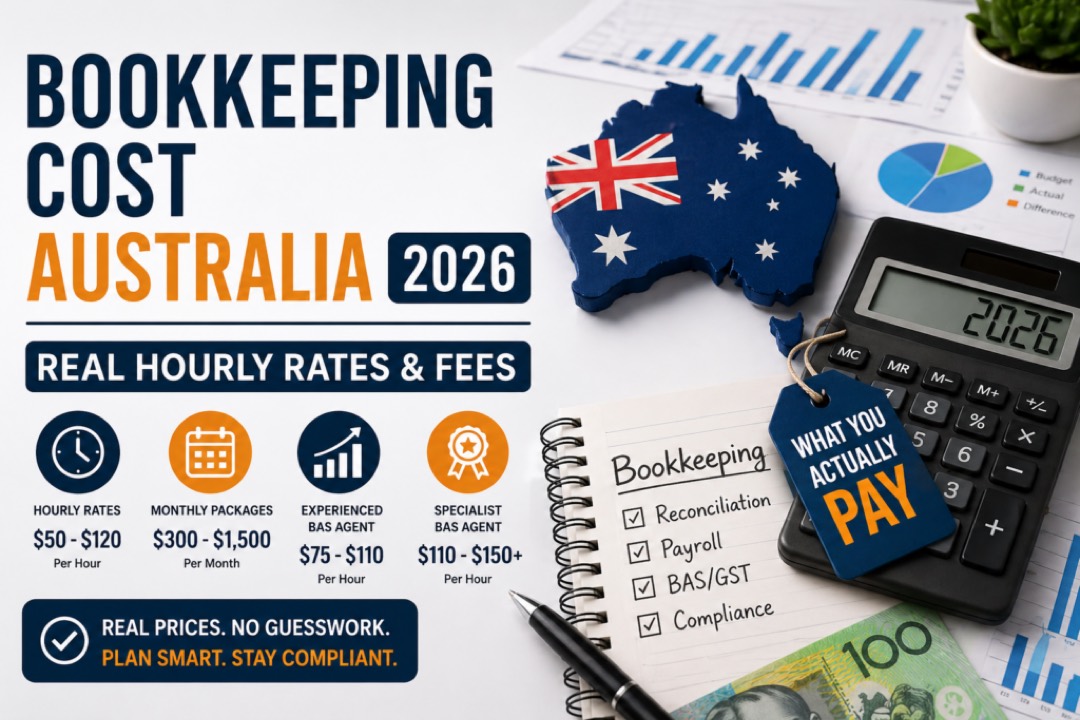
Ultimate Pricing Guide for Bookkeeping Cost Australia 2026: Real Hourly Rates & Fees

5 Common Bookkeeping Mistakes Melbourne Small Businesses Make
From mixing personal and business expenses to missing GST deadlines, these mistakes could be costing you.

Why Xero is Australia’s Top Choice for Small Business Accounting
A deep dive into the features that make Xero the superior choice for cloud bookkeeping in 2024.